UNRCPD launches 2026 Regional Briefing Series with discussion on the Secretary-General’s military expenditure report
As military expenditure reaches new highs globally, questions are growing about how security priorities are set—and what the wider implications may be for development and human security. On 5 March 2026, as part of the International Day for Disarmament and Non-Proliferation Awareness (IDDNPA), the United Nations Regional Centre for Peace and Disarmament in Asia and the Pacific (UNRCPD) will launch its 2026 Regional Briefing Series with an online discussion of the United Nations Secretary-General’s report on military expenditure, “The Security We Need: Rebalancing Military Spending for a…
Envisioning a World Free from Nuclear Weapons
Youth Art, Dialogue and Skills Workshops for a Nuclear-Weapon-Free Southeast Asia
Marking 30 Years of the Southeast Asia Nuclear Weapons Free Zone Treaty (The Treaty of Bangkok)
BANGKOK - 15-17 December 2025
On the morning of 15 December, the halls of Thailand’s Ministry of Foreign Affairs filled with something one does not often see at disarmament commemorations: youth artworks.
Through the "Envisioning a World Free from Nuclear Weapons", a Youth Multimedia Arts Competition, photographs, films, and digital art—created by young people from…
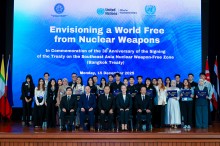
Winners of the Youth Multimedia Arts Competition: “Envisioning a World Free from Nuclear Weapons” Announced
To mark the 30th anniversary of the signing of the Treaty on the Southeast Asia Nuclear-Weapon-Free Zone (Treaty of Bangkok), the Government of Thailand and the United Nations Office for Disarmament Affairs (UNODA), through its Regional Centre for Peace and Disarmament in Asia and the Pacific (UNRCPD), launched the Youth Multimedia Arts Competition 2025: “Envisioning a World Free from Nuclear Weapons”. The initiative is also organized through the support from the Youth Leader Fund for a World without Nuclear Weapons (YLF), as a regional component of that programme, funded by the…
Southeast Asian States Advance Biosafety, Biosecurity and BWC Implementation at Regional Workshop in Guangzhou
Guangzhou, China — 20 November 2025.
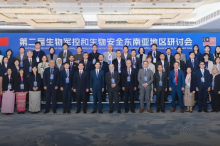
From 18 to 20 November, government officials and technical experts from across Southeast Asia convened in Guangzhou for the Second Regional Workshop on Implementing the Biological Weapons Convention (BWC) and Promoting Biosafety and Biosecurity in Southeast Asia. The workshop was co-hosted by the Governments of China and Malaysia, with support from the United Nations Office for Disarmament Affairs (UNODA) through the BWC Implementation Support Unit (BWC-ISU) and the Regional Centre for Peace and Disarmament in Asia and the Pacific (…
Regional Briefings on Information and Communications Technologies and Artificial Intelligence in the Military Domain
The rapid rise of artificial intelligence and other emerging technologies is fundamentally reshaping global security, and the Asia-Pacific region finds itself at the heart of this transformation. Home to some of the world’s most dynamic hubs of innovation, the region is driving breakthroughs with enormous potential for sustainable development. Yet these rapid advances also bring critical security challenges that demand urgent attention. This combination of innovation and vulnerability positions Asia-Pacific States as both stakeholders and potential norms setters in shaping…
From Nepal to Timor-Leste, Fiji to South Africa, more than 1,600 people joined the Disarmament Toolkit 2025
Disarmament is not just about eliminating weapons; it’s about shifting narratives of power, peace, and people,” wrote one participant from India. For another participant from South Africa, the key lesson was that “it’s not weapons that have brought about peace in the world, but the actions of people moving conversations forward.” From Nepal to Timor-Leste, from Fiji to South Africa, voices from the Disarmament Toolkit 2025 echoed the same truth: young people are not just the future of disarmament—they are already shaping its present, bringing urgency,…
Strengthening Peace and Security in Papua New Guinea: A National Workshop on Small Arms and Light Weapons
Port Moresby, 7–8 August 2025 – The Government of Papua New Guinea (GoPNG) and the United Nations, through the SALIENT initiative, took a major step forward in their joint efforts to address armed violence and illicit small arms proliferation. The two-day National Workshop on Small Arms Control brought together senior government leaders, members of Parliament, diplomatic representatives, civil society organizations and technical experts to consolidate progress and chart the way forward.
A Collaborative Effort Under SALIENTSALIENT in Papua New Guinea…
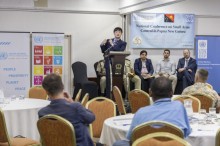
National Training on Small Arms and Light Weapons Control
From 19 to 23 May 2025, the United Nations Regional Centre for Peace and Disarmament in Asia and the Pacific (UNRCPD) travelled to Suva, Fiji. UNRCPD, in partnership with the Ministry of Defence and Veteran Affairs (MoDVA) of Fiji and with support from the European Union, conducted a national training and assessment mission in Suva to support the implementation of the UN Programme of Action on Small Arms and Light Weapons (PoA) and its International Tracing Instrument (ITI). The UNRCPD team was joined by experts from the Mines Advisory Group (MAG)—including the Regional Director for Asia…
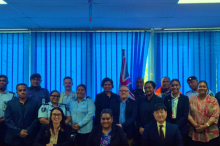
Oxford Diplomatic Society Visits UNRCPD to Explore Regional Opportunities for Disarmament in Asia-Pacific
On 16 April 2025, the United Nations Regional Centre for Peace and Disarmament in Asia and the Pacific (UNRCPD) had the pleasure of welcoming a delegation from the Oxford Diplomatic Society to UN House in Kathmandu, as part of the Society’s 10-day visit to Nepal.
The delegation, comprising graduate students and professionals from diverse academic and career backgrounds, visited UNRCPD to gain a deeper understanding of the United Nations’ disarmament efforts and the Centre’s contribution to peace and security in the Asia-Pacific region. The session featured a comprehensive…
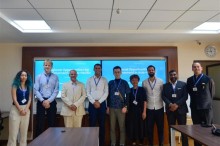
Strengthening National and Regional Cooperation on Small Arms Control: UNRCPD Deepens Engagement with ASEAN
Advancing its regional disarmament and cooperation efforts, the United Nations Regional Centre for Peace and Disarmament in Asia and the Pacific (UNRCPD) undertook two back-to-back missions to Cambodia, reinforcing its partnership with the country’s Ministry of Interior (MoI) and expanding collaboration with the Association of Southeast Asian Nations (ASEAN).
From 18 to 20 March 2025, UNRCPD conducted a series of high-level meetings with senior officials of Cambodia’s Ministry of Interior in Phnom Penh. The meetings were chaired by senior officials of the Ministry of…

Informal Regional Meeting to discuss Lessons Learned and Opportunities from the Progressive Harmonization of Small Arms Control and Women, Peace and Security
On the occasion of two important anniversaries—30 years since the adoption of the Beijing Declaration and 25 years since the passage of UN Security Council Resolution 1325—Kathmandu served as the centre of an important regional dialogue. These milestones offered renewed momentum to advance the Women, Peace and Security (WPS) agenda and arms control frameworks as interconnected pillars of human security. The United Nations Regional Centre for Peace and Disarmament in Asia and the Pacific (UNRCPD), in collaboration with the Government of Nepal, convened an Informal Regional…
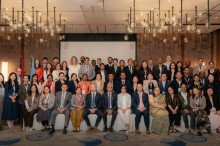
50 Years of the BWC: Strengthening Biological Security in the Asia-Pacific
Biological weapons use disease-causing organisms or toxins to harm or kill humans, animals or plants.They can be deadly and highly contagious causing humanitarian, environmental and economic consequences. Diseases caused by such weapons would not confine themselves to national borders and could spread rapidly around the world, to devastating effect. The consequences of the deliberate release of biological agents or toxins by State or non-State actors could be dramatic. In addition to the tragic loss of lives, such events could cause food shortages, environmental catastrophes, devastating…
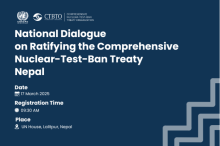
National Dialogue on Ratifying the Comprehensive Nuclear-Test-Ban Treaty (CTBT) – Nepal
Nepal was one of the first countries to sign the Comprehensive Nuclear-Test-Ban Treaty when it opened for signatures in 1996, in line with their long-standing commitment to a world free from weapons of mass destruction. However, Nepal has yet to ratify the Treaty as of March 2025. To encourage constructive dialogue, identify the road ahead and allay any Nepali concerns surrounding this crucial next step of its relationship with the CTBT, the United Nations Regional Centre for Peace and Disarmament in Asia and the Pacific (UNRCPD) hosted a meeting with Nepali government officials and…
Looking Back to Move Forward: Taking Stock of Asia-Pacific Civil Society Efforts to Address the Illicit Trade and Circulation of Small Arms and Light Weapons
The IANSA webinar focused on strengthening civil society engagement and advancing the UN Programme of Action on Small Arms and Light Weapons (UN PoA). Key highlights included:
Raising Awareness: Experts and stakeholders discussed emerging security threats in the Asia-Pacific region, including the role of technology, the climate crisis, and gender-based violence in exacerbating armed violence. Commitments & Challenges: Asia-Pacific Member States’ commitments to the UN PoA were examined, with a focus on the challenges they face in implementation and areas where civil society…
From Awareness to Action: Engaging Youth in Disarmament and Non-proliferation
The International Day for Disarmament and Non-Proliferation Awareness, established by the UN General Assembly at Kyrgyzstan’s initiative, highlighted critical global security issues. This event addresses contemporary challenges such as the spread of weapons of mass destruction, ongoing military conflicts, and the need for stronger international arms control mechanisms.
The lecture aimed to educate young professionals and students on disarmament frameworks, explore future prospects, and emphasize the role of diplomacy and international organizations in advancing disarmament…

From Strength to Strength: Increasing ATT Membership in the Asia Pacific
Since its entry into force in December 2014, the Arms Trade Treaty (ATT) has been the only legally binding international agreement regulating the global arms trade. But in the Asia-Pacific 10 years on, attitudes towards the treaty vary greatly, despite relatively strict national laws on arms control and strengthening regional frameworks for cooperation and trade controls. Fifteen states in the Asia Pacific are states parties while eleven more are signatories. However, a further thirty have not yet joined the ATT. This is the highest figure of outstanding states for any region worldwide,…

The 5th Annual Disarmament and International Security Affairs Fellowship Programme
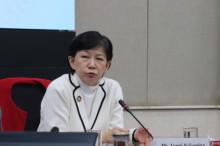
On 17 January 2025, Ms. Izumi Nakamitsu, UN Under-Secretary-General and High Representative for Disarmament Affairs, addressed participants of the 5th Annual Disarmament and International Security Fellowship and Indian Foreign Service Officer Trainees.
In her remarks, Ms. Nakamitsu reflected on the historical significance of disarmament in shaping global peace and security. She also addressed the current challenges facing multilateralism, including geopolitical tensions and emerging threats such as advanced technologies in warfare.
Despite these challenges, she…
Gender, Mental Health, and Peace Processes inclusion in the UNPoA and SALW
UNRCPD Moderates Webinar on Integrating Gender, Mental Health, and Peace Processes into the UNPoA on SALW
Organized by NISEA and IANSA, this webinar explored key themes such as the inclusion of gender perspectives, mental health, and peace processes in the RevCon4 outcomes, as well as the challenges of indigenous people’s inclusion. Discussions also focused on how CSOs can enhance their participation in the UNPoA through peacebuilding, synergies, and intersectionality.
The session featured insights from:
Mr. Sunil…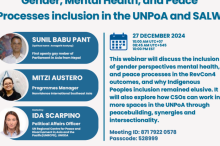
Delegation of the Kingdom of Cambodia visit to the Western Balkans (North Macedonia, Serbia)
The study tour was organized as part of the technical and financial assistance provided to Cambodia’s Ministry of Interior, under the EU-funded project in support of the UN PoA/ITI. The activity, co-organized with UNDP SEESAC, aimed to advance Cambodia’s efforts to establish a National Coordination Mechanism and develop a national strategy on SALW, while also strengthening Cambodia’s leadership in implementing the ASEAN Declaration on Combating Arms Smuggling.
Latest Updates 20 February 2026…
The Informal Regional Meeting on the Global Framework for Through-life Conventional Ammunition Management
Asia-Pacific States convened in Kathmandu to promote sustainable, safe and secure ammunition managementWhat is a gun without bullets? It is the bullet—tiny, unassuming, yet devastating—that fuels the fires of conflict, transforming intent into impact. People don’t die from gun wounds; they die from bullet wounds. Ammunition, often overlooked in disarmament…