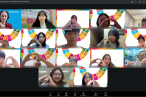
“Let’s all be like ants!”
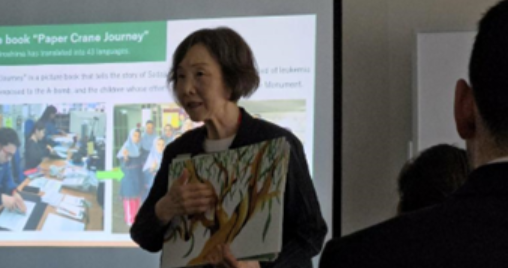
When Ms. Tomoko Watanabe, Executive Director of ANT-Hiroshima (Asian Network of Trust), shared this message during our fieldwork, I was surprised. It made me wonder: Me, an ant? She explained that although an ant may seem small, ants can achieve remarkable things through steady effort and teamwork. They build, adapt, support one another, and accomplish far more than any one ant could alone.
(Photo by Antonia Q. Buyser)
That simple lesson reflects the spirit of Hiroshima. Although the city experienced immense suffering following the atomic bombing on 6 August 1945, it has since become a global symbol of peace, resilience, and hope.
I was a participant of the Youth Leader Fund for a World without Nuclear Weapons (YLF) recent study visit to Hiroshima alongside fellow Grand Prize Winners of the "Envisioning a World Free from Nuclear Weapons" Youth Multimedia Arts Competition. I came to appreciate that peace is built through small acts of compassion, collaboration, and leadership. This is the story of that journey unfolded across three chapters.
- From Bangkok to Hiroshima: Bridging Policy and Human Experience
Our journey began in Bangkok during the in-person programme of the Youth Multimedia Arts Competition, the regional component of the YLF for a World without Nuclear Weapons, funded by the Government of Japan. Organized by the United Nations Regional Center for Peace and Disarmament in Asia and the Pacific (UNRCPD), the competition took place in late 2025, in commemoration of the 30th anniversary of the Bangkok Treaty, or the Southeast Asia Nuclear-Weapon-Free Zone (SEANWFZ) Treaty, bringing selected Grand Prize Winners into the broader YLF programme.
In Bangkok, we learned about nuclear disarmament through international law, regional treaties, and diplomacy. While these discussions introduced us to important policy frameworks, our YLF study visit to Hiroshima transformed those concepts into a lived human experience.
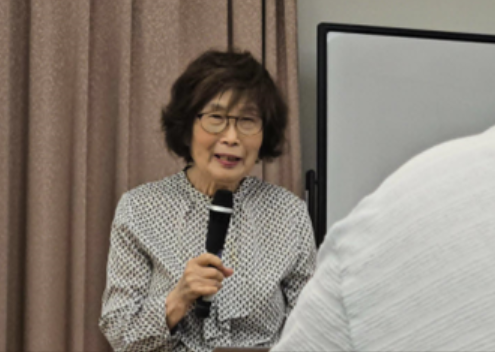
In Hiroshima, we met hibakusha, the Japanese term for survivors of the atomic bombings, whose stories reminded us that behind every treaty, there are real people and generations shaped by the consequences of war. A strong message stayed with me throughout the YLF programme as hibakusha Keiko Ogura shared: “Knowing is the first step to peace.”
(Photo by Antonia Q. Buyser)
Her words emphasized the urgency of sharing knowledge with the upcoming generations as we gradually enter the “post-hibakusha” era, in which firsthand testimonies of the consequences of the atomic bombings are slowly fading. She encouraged us, as young leaders, to carry their stories forward through education, advocacy, and dialogue, and to apply the lessons we learned to our respective fields.
This mission came to life during our fieldwork. At ANT-Hiroshima, we learned how the organization preserves hibakusha testimonies through books, art, animation, and community initiatives to spread peace. It was during this session that Executive Director Ms. Tomoko Watanabe reminded us, “Let’s all be like ants.” Like ants, meaningful change begins with consistent small actions carried out together.
Our discussion with fellow YLF participants reinforced this idea. We reflected on making peacebuilding more inclusive, investing in initiatives that strengthen communities, and helping people see that everyone can contribute to nuclear disarmament, no matter how small their role may seem.
(Photo by Antonia Q. Buyser)
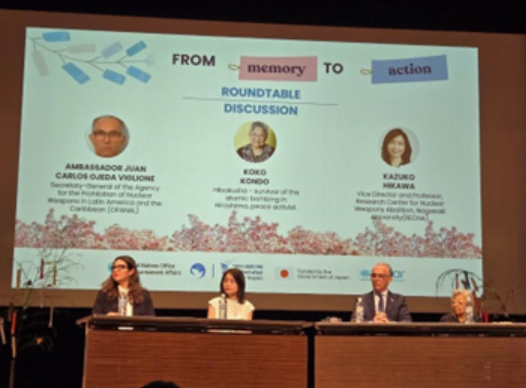
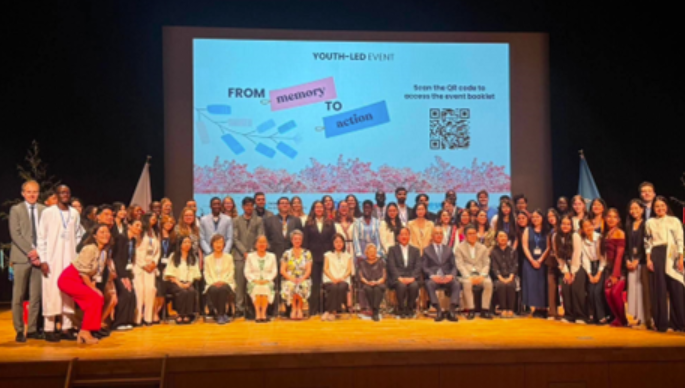
Our journey concluded with the youth-led event “From Memory to Action”, where Koko Kondo, a hibakusha, shared her experience of meeting Colonel Paul Tibbets, the pilot of the Enola Gay, which carried the atomic bomb dropped on Hiroshima. Although she had initially carried anger, seeing his humanity allowed forgiveness to replace resentment. Her story reminded us that lasting peace is built not only through policy, but also through empathy, dialogue, and reconciliation.
From Bangkok to Hiroshima, we discovered that effective peacebuilding must bridge the gap between diplomacy and human experience. Policies establish the framework, but the voices of survivors, communities, and young people give those commitments lasting meaning.
- Youth Voices: Reflections from the field
One of the YLF programme’s greatest strengths is its interdisciplinary approach to peacebuilding. Participants came from diverse fields, including law, medicine, communications, engineering, and the arts, demonstrating that building a world free from nuclear weapons requires insights from many areas of expertise.
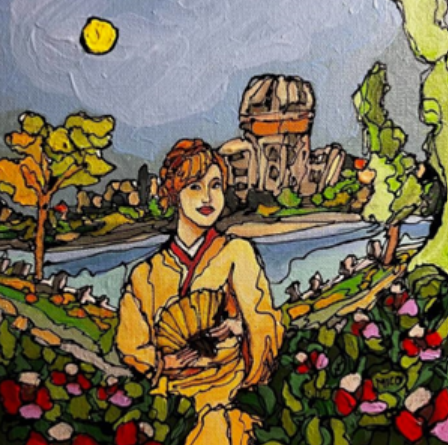
This was beautifully captured in the work of Michael Angelo Iglesia Escorpeso, joint Grand Prize Winner in the Visual Arts (Traditional) category of the Youth Multimedia Arts Competition. Inspired by our study visit, he translated his experience into art and shared:
"Hiroshima is such a beautiful place and well worth visiting. I was inspired by the Hiroshima Peace Memorial and the Atomic Bomb Dome, which continue to remind us of the consequences of nuclear warfare. Through this artwork, I hope to encourage others to remember the past while working toward a more peaceful future."
Reflecting on how the experience shaped him as an artist, during the final event of the study visit, Michael added:
"Before, I saw art as a way to tell stories and express myself. But my journey to Bangkok and Hiroshima taught me that art is also a responsibility. It can inspire people, change perspectives, and connect us beyond borders. That experience shaped the advocacy I now carry as an artist: 'To create, not destroy.'"
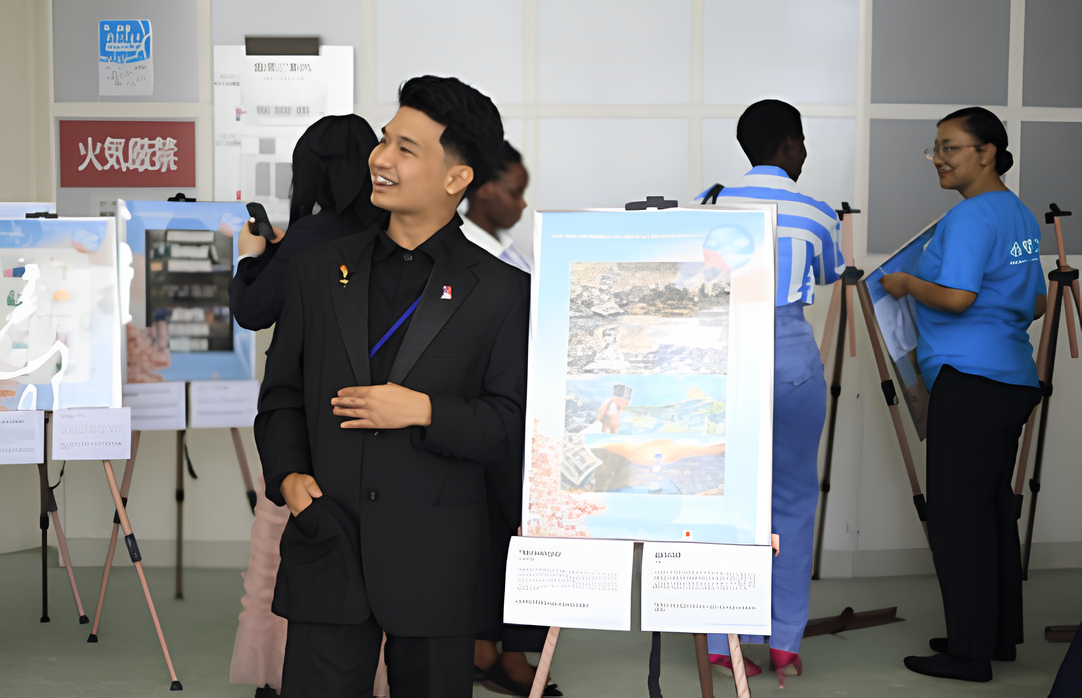
Michael's reflection was echoed by the other Grand Prize Winners, each demonstrating how their own discipline contributes to peacebuilding.
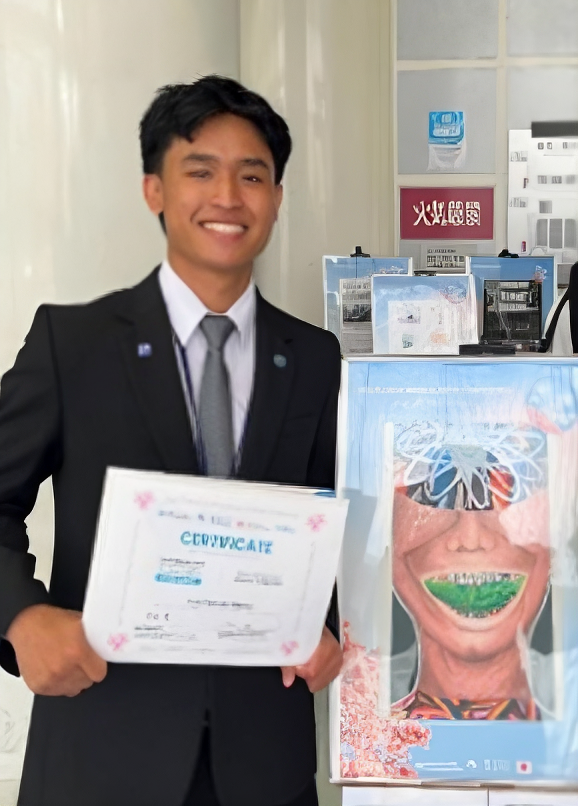
Luis Venriko Mumu, joint Grand Prize Winner in the Visual Arts (Traditional) category and a nuclear engineering student, reflected:
"As a nuclear engineering student, I learned that art can communicate urgent messages beyond technical language. Listening to the hibakusha and visiting the Peace Memorial Museum reminded me that understanding history is not only about remembering the past, but also about taking responsibility for the future."
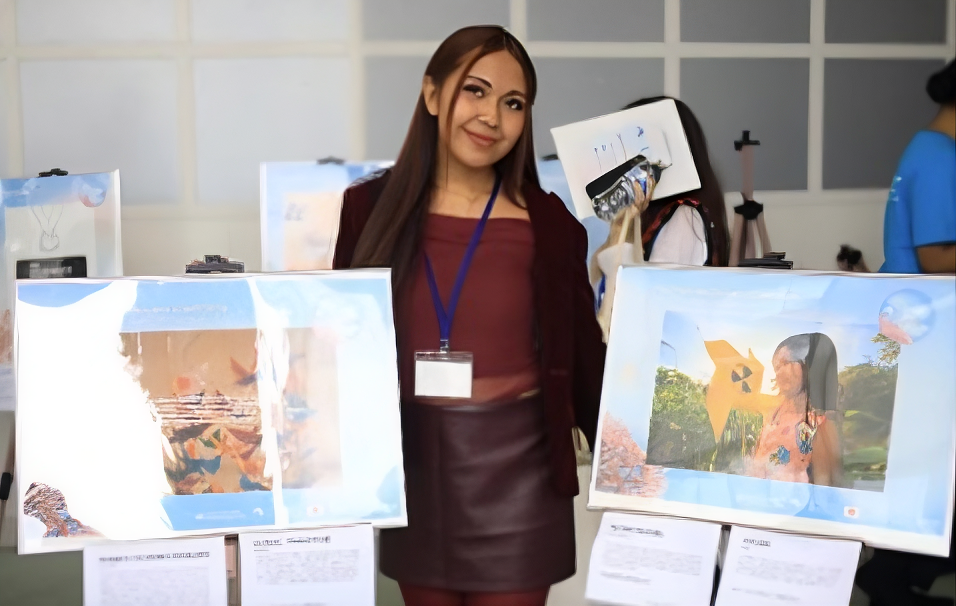
Prince “Mayumi” Loyd Cabalida Besorio, joint Grand Prize Winner in the Film and Photography categories of the Youth Multimedia Arts Competition and a creative communications advocate, reflected on how storytelling can transform memory into meaningful action for nuclear disarmament and peacebuilding.
"Hiroshima transformed how I see creative storytelling. It showed me that peacebuilding is not only about remembering tragedy, but also about turning that remembrance into action that inspires others."
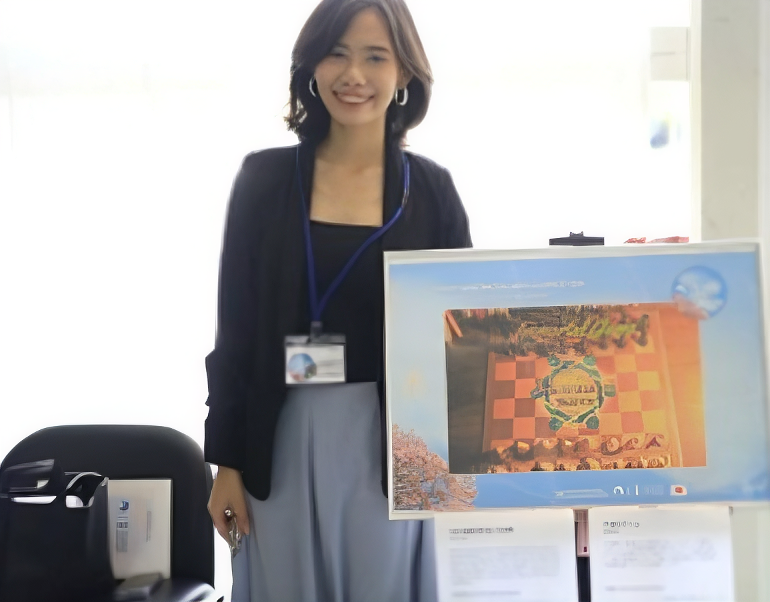
Reflecting as a psychology student and filmmaker, I realized:
"My film, The Immortal Game, uses chess as a metaphor for nuclear strategy, reminding us that every decision has human consequences. Hiroshima reinforced my belief that storytelling can move people from passive remembrance to active peacebuilding. We are all pieces on this global chessboard, and the next move belongs to us."
(Photo by Antonia Q. Buyser)
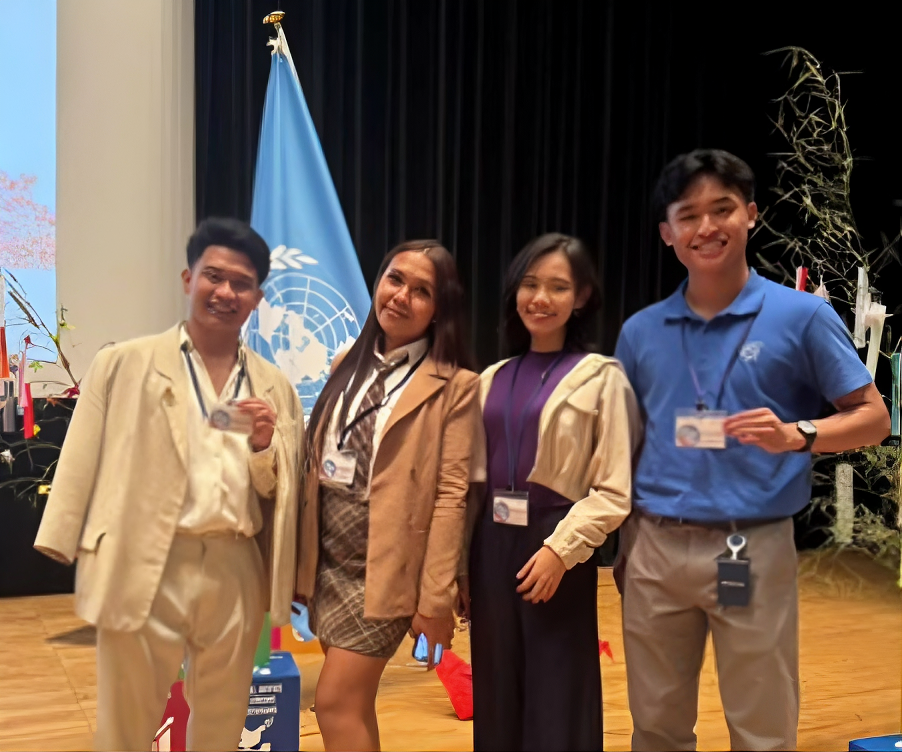
Through art, engineering, communications, and psychology, our experiences demonstrate that disarmament is not a solitary pursuit. For Michael, art became a social responsibility. Luis combined the precision of engineering with the human power of storytelling. Mayumi showed how collective grief can be transformed into an urgent call for prevention. Through psychology, filmmaking, and strategic thinking, I came to understand peace as an active and deliberate choice. Our artworks demonstrate that every discipline has a role to play in building a world free from nuclear weapons.
(Photo by Racquel Gertrude Correa)
- A Call to the Next Generation
As we departed Hiroshima, the psychological weight of what we had witnessed remained, accompanied by a stronger commitment to peace. We learned that peacebuilding is not only the work of politicians and diplomats. It requires artists, young people, students, scientists, and communities to work together.
If there is one collective message we would like to leave with young people around the world, it is this: carrying forward the legacy of the hibakusha means more than remembering their stories. It means living out their message.
(Photo by UNODA)
Inspired by their courage, we can build a more peaceful future through intentional and collective action. Like ants, every small act of compassion, leadership, and advocacy can bring us one step closer to a world free from nuclear weapons.
We may pursue different disciplines, but each of us has the capacity to make a meaningful contribution, whether through quantum physics, fine arts, policy education, or community organizing. No contribution is too small when it is driven by genuine purpose. Structural change often begins with a single idea, a single conversation, or one individual daring to take the first step.
Inspired by this idea, I was inspired to advocate for peace through the Atomic Change Youth Initiative (@atomicchangeyouth). This youth-led platform makes nuclear disarmament and the peaceful uses of nuclear science more accessible to young people. It is one small way of carrying forward the legacy of the hibakusha through education, dialogue, and collective action.
Like ants, our individual efforts may seem small, but combined, they can help build a more peaceful future.
Dear readers, let us carry forward the legacy of the hibakusha.
The material in this publication and the views of the authors are their own and do not necessarily reflect those of the United Nations or its Member States.
For more information, contact unrcpd-info@un.org.
About the Author
Antonia Q. Buyser is a recent graduate from the University of the East Caloocan, Philippines, where she earned her Bachelor of Science in Psychology as the Summa Cum Laude and Valedictorian of her graduating batch. Throughout her university years, she served in multiple student leadership roles, culminating in her tenure as President of the Central Student Council, the highest student representative body of the campus. She is passionate about nuclear disarmament, peacebuilding, mental health advocacy, and expanding educational opportunities for Indigenous communities, believing in the power of interdisciplinary collaboration to create meaningful social change.
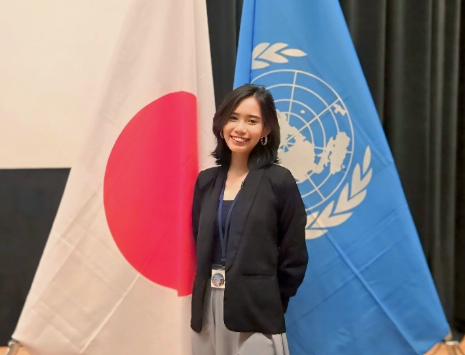
Currently, Antonia is establishing the Atomic Change Youth Initiative, an international youth-led organization that brings together young leaders from different countries to advance nuclear disarmament education, peacebuilding, and the responsible use of nuclear science through the lens of psychology and other disciplines. Outside of her advocacy work, she enjoys practicing martial arts, skateboarding, reading, listening to music, traveling, and solving Rubik's Cubes.
To learn more about Antonia's work, connect with her on LinkedIn: https://www.linkedin.com/in/antonia-buyser-844a9b357/